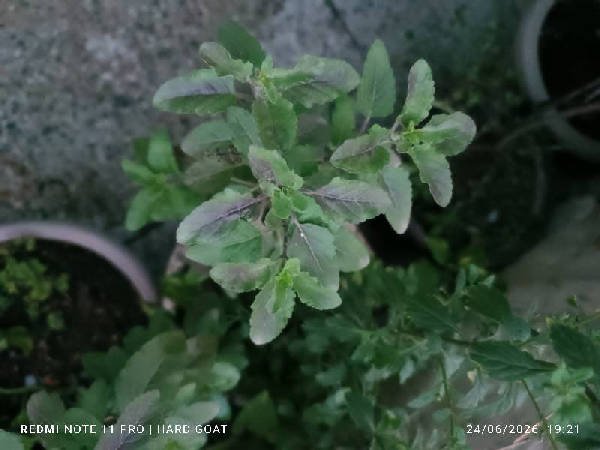
This comprehensive diagnostic health report details care protocols and recovery actions for your Tulsi (Holy Basil) (Ocimum tenuiflorum).
Do you have a Tulsi (Holy Basil)?
Get real-time watering reminders, personalized lighting analytics, and unlock unlimited diagnostic scans directly on your phone!
Health Diagnosis
Status: Sick
Diagnosed Issue: Healthy
Observed Symptoms
- Slight purplish tint on some leaves (normal for Krishna Tulsi)
- No obvious signs of pests or disease
Actionable Remedies & Cure
- Ensure good drainage to prevent root rot.
- Provide adequate sunlight for robust growth.
- Prune regularly to encourage bushier growth.
- Fertilize lightly during growing season.
Detailed Expert Analysis
Plant Health Assessment
Your Holy Basil (Ocimum tenuiflorum) appears to be in good health. The foliage is vibrant, and there are no immediate signs of severe distress, pests, or diseases. A slight purplish hue on some leaves is normal for certain varieties like Krishna Tulsi and indicates good sun exposure.
Essential Care Guidelines
To ensure your Holy Basil continues to thrive, follow these essential care practices:
- Watering: Holy Basil prefers consistently moist soil but dislikes waterlogging. Water thoroughly when the top inch of soil feels dry to the touch. Ensure pots have excellent drainage. Reduce watering slightly in cooler months.
- Light: Provide at least 6 hours of direct sunlight daily. It thrives in full sun but can tolerate partial shade, especially in very hot climates. Insufficient light can lead to leggy growth.
- Temperature & Humidity: This plant loves warmth, ideally between 68-85°F (20-30°C). It is highly sensitive to frost and should be protected or brought indoors when temperatures drop below 50°F (10°C). Average household humidity is usually sufficient.
- Soil: Use well-draining, fertile potting mix. A slightly acidic to neutral pH (6.0-7.0) is ideal.
- Fertilization: Feed lightly every 2-4 weeks during the growing season (spring and summer) with a balanced liquid fertilizer diluted to half strength. Avoid over-fertilizing, which can reduce flavor intensity.
- Pruning: Regularly pinch off the top sets of leaves and flower buds (if you don’t want seeds) to encourage bushier growth and prevent the plant from going to seed too early, which can shorten its lifespan.
Potential Minor Concerns & Remedies
While your plant looks healthy, here are common minor issues and how to address them:
- Leggy Growth: If stems become long and sparse, it often indicates insufficient light. Move the plant to a brighter location and prune back leggy stems to encourage new growth.
- Yellowing Leaves: This can be a sign of overwatering (leading to root rot) or underwatering. Check soil moisture and adjust your watering schedule. It can also indicate a nutrient deficiency; consider a light feed.
- Pests: Holy Basil is generally pest-resistant, but occasionally aphids or spider mites can appear. Inspect regularly. If found, spray with neem oil or insecticidal soap.
General Tips for Holy Basil
- Harvesting: Harvest leaves as needed by pinching off the top few leaves from a stem. Regular harvesting promotes more vigorous growth.
- Repotting: Repot annually in spring if the plant becomes root-bound, moving to a slightly larger pot.
- Toxicity: Holy Basil is non-toxic and safe for human consumption and pets. It’s widely used in traditional medicine and culinary applications.
Conclusion
Your Holy Basil is thriving. Continue with consistent care, paying attention to light, water, and regular pruning, and it will provide you with abundant aromatic leaves.
Do you have a Tulsi (Holy Basil)?
Get real-time watering reminders, personalized lighting analytics, and unlock unlimited diagnostic scans directly on your phone!