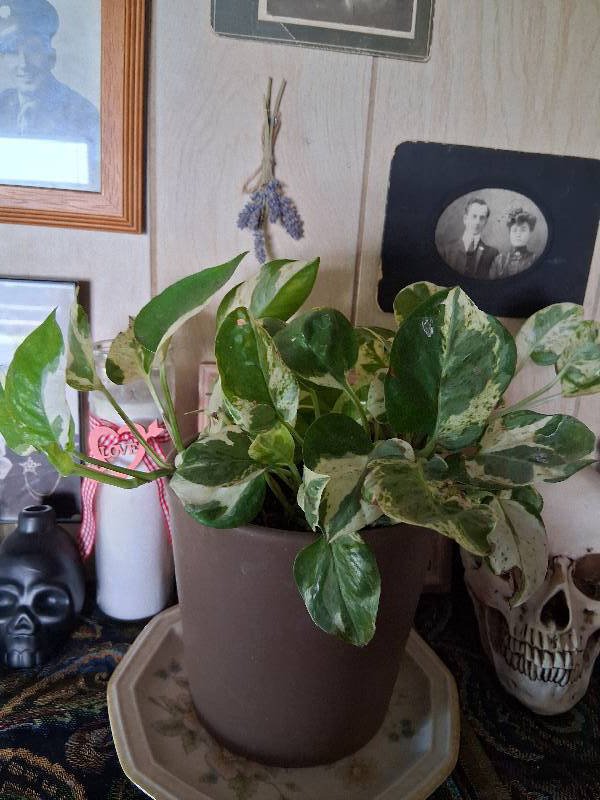
This certified botanical diagnosis report details environmental parameters, pathological observations, and recovery steps for POTHOS 'N'JOY' (Epipremnum aureum).
Growing POTHOS 'N'JOY'?
Get real-time watering reminders, soil chemistry formulation, and instant multi-spectral botanical scans directly on your mobile device!
| Report Category | Identification |
| Primary Diagnosis | Healthy |
| Severity Level | Moderate |
Observed Symptoms
- Slight leaf discoloration
- Potential for leggy growth
Actionable Protocols
- Ensure consistent watering, allowing soil to dry.
- Provide bright, indirect light for best variegation.
- Consider pruning leggy stems for bushier growth.
In-Depth Agronomy Analysis
Plant Health Report: Pothos ‘N’Joy
Overall Assessment
Your Pothos ‘N’Joy appears to be in good health with vibrant variegation. Minor leaf imperfections are noted, but overall, the plant is thriving. Maintaining optimal care will ensure its continued vitality.
Care Guide
Watering
Water thoroughly when the top inch of soil feels dry to the touch. Ensure the pot has drainage holes to prevent root rot. Reduce watering frequency in winter.
Light
This cultivar thrives in bright, indirect light. Direct sunlight can scorch the leaves and fade the variegation. Low light conditions may lead to less vibrant variegation and leggy growth.
Temperature & Humidity
Pothos ‘N’Joy prefers average room temperatures between 18-29°C (65-85°F). Avoid sudden temperature drops or cold drafts. Average household humidity is usually sufficient, but higher humidity can be beneficial.
Soil & Potting
Use a well-draining potting mix. Repot every 1-2 years or when the plant becomes root-bound, typically in spring.
Fertilization
Feed with a balanced liquid fertilizer every 2-4 weeks during the growing season (spring and summer). Reduce or stop fertilization in fall and winter.
Toxicity
Pothos plants are toxic to pets and humans if ingested due to calcium oxalates. Keep out of reach of children and animals.
Observed Symptoms & Remedies
- Slight Leaf Discoloration/Imperfections: While minor, this could indicate slight stress. Ensure consistent watering and light.
- Potential for Leggy Growth: If stems become long with sparse leaves, it often means insufficient light.
Remedy Steps:
- Optimize Watering: Always check soil moisture before watering. Overwatering is a common killer.
- Adjust Light: Move to a location with brighter, indirect light to enhance variegation and promote compact growth.
- Pruning: Trim back leggy stems just above a node to encourage bushier growth and propagate cuttings.
- Clean Leaves: Gently wipe leaves with a damp cloth to remove dust and improve photosynthesis.
Prevention & Maintenance
- Regularly inspect for pests like spider mites or mealybugs.
- Rotate the plant periodically to ensure even growth.
- Provide a trellis or moss pole if you want it to climb.
Conclusion
Your Pothos ‘N’Joy is a beautiful and resilient plant. With consistent attention to its light and watering needs, it will continue to thrive and bring beauty to your home in Burrton, Kansas.
Growing POTHOS 'N'JOY'?
Get real-time watering reminders, soil chemistry formulation, and instant multi-spectral botanical scans directly on your mobile device!